

Did you know that a quarter of all of the bones in your body are in your feet? In your feet you have 26 bones, 33 joints and a network of over 100 muscles, ligaments and tendons in each foot. The sole of the foot itself is covered in a sheet of fascia: the “plantar fascia” which attaches just behind each toe and runs up to the heel bone and it aids in supporting the arch of the foot. When this fascia is strained it causes inflammation and pain which you may have either had or heard of: “Plantar Fasciitis”
As a Yoga and Pilates instructor teaching and exercising in bare feet, the benefits of barefoot training have become very apparent to me and have also been backed up with a lot of scientific research. In today’s society we spend the majority of our time in shoes, and even in Cyprus flip-flops don’t count as barefoot I’m afraid! Our feet go through a lot and certain factors such as our individual gait (how our feet hit the ground and absorb impact), the amount of time we spend on our feet, our choice of footwear and our weight can all have a detrimental effect on the alignment of the bones and joints of your feet.
You recall the song “Dem Bones” which starts “Your foot bone’s connected to your ankle bone, your ankle bone’s connected to…” etc etc?

Well it’s a simple way of illustrating the link between the alignment of our feet and all of the other joints of the body. The alignment of the foot determines and alignment and function of the ankle, knee, hip and therefore the condition of the pelvis.
The condition of the pelvis in turn determines the condition and alignment of the spine. When you consider that the spine houses the central nervous system and has a network of nerves that feed out into the various systems and internal organs of the body, the alignment and flexibility of your spine is crucial in maintaining good health.
When we train in bare feet, we are not only helping to strengthen and mobilise the bones and joints of the feet, and therefore improve alignment but we are also activating a huge system of sensory feedback to our central nervous system-which increases our proprioceptive awareness. Proprioception is defined as the “sense of the relative position of one’s own parts of the body and strength of effort being employed in movement. It is sometimes described as the “sixth sense”. In humans, it is provided by proprioceptors in skeletal striated muscles and tendons and the fibrous membrane in joint capsules” (Wikipedia). The soles of the feet have the most concentration of proprioceptors per square inch of the body and therefore training in bare feet is the best way to improve one’s balance and heighten one’s movement confidence: the result of which is fewer falls and injuries.Training barefoot can also help us to access deeper breathing as explained here by Matthew Krepps, yoga instructor and owner of Barefoot Studio, Little Rock, Arkansas: “It is well known in the science of acupressure and reflexology that certain points on the foot correspond to the state and function of internal organs. In the Yoga practice, breath is a central concern. It is therefore of paramount importance that the chest remain open and unrestricted, so the lungs can function without struggle. One way to accomplish this is by the correct use of the feet, there is a thoracic reflex in the foot, a place whose activation encourages the opening of the chest itself. This place is what we refer to in common parlance as the “ball” of the foot, and in anatomical terms as the “landing pad”. It spans the distance from the mound of the big toe (where the big toe hooks onto the foot) to the mound of the little toe. Lengthening this space, and broadening it, so that the toes lift slightly away from the floor and spread out like fans, stimulates reflexes in the chest to open it; enhancing deep breath control”
Whilst spending some time each day barefoot can go some way towards improving alignment, building the strength and function of the foot is something which can only be achieved by specifically training in bare feet. The Overload Principle: Force applied to a muscle group can ultimately build strength; requires that we consistently train any muscle group that we wish to strengthen. This means that, as with all muscle groups, barefoot training must occur at least twice a week in order to see any physiological change in the muscle structure. Stop the training or train just once a week and you will still feel the niggles, aches and pains because the joints are not supported by the muscles, and therefore take all of the strain. We all know what aching joints can feel like so take a stand today (hopefully in bare feet) and join me for one of my classes: your body and mind shall thank you for it!
Benefits of Barefoot Training
- Better proprioception when foot skin is stimulated
- Better balance when ankles and toes are strong
- Better posture and heightened movement confidence
- Heightened functional movement: activities of daily living become easier
- *Fewer falls and injuries
- It feels less like “exercise” and more like “playtime!”
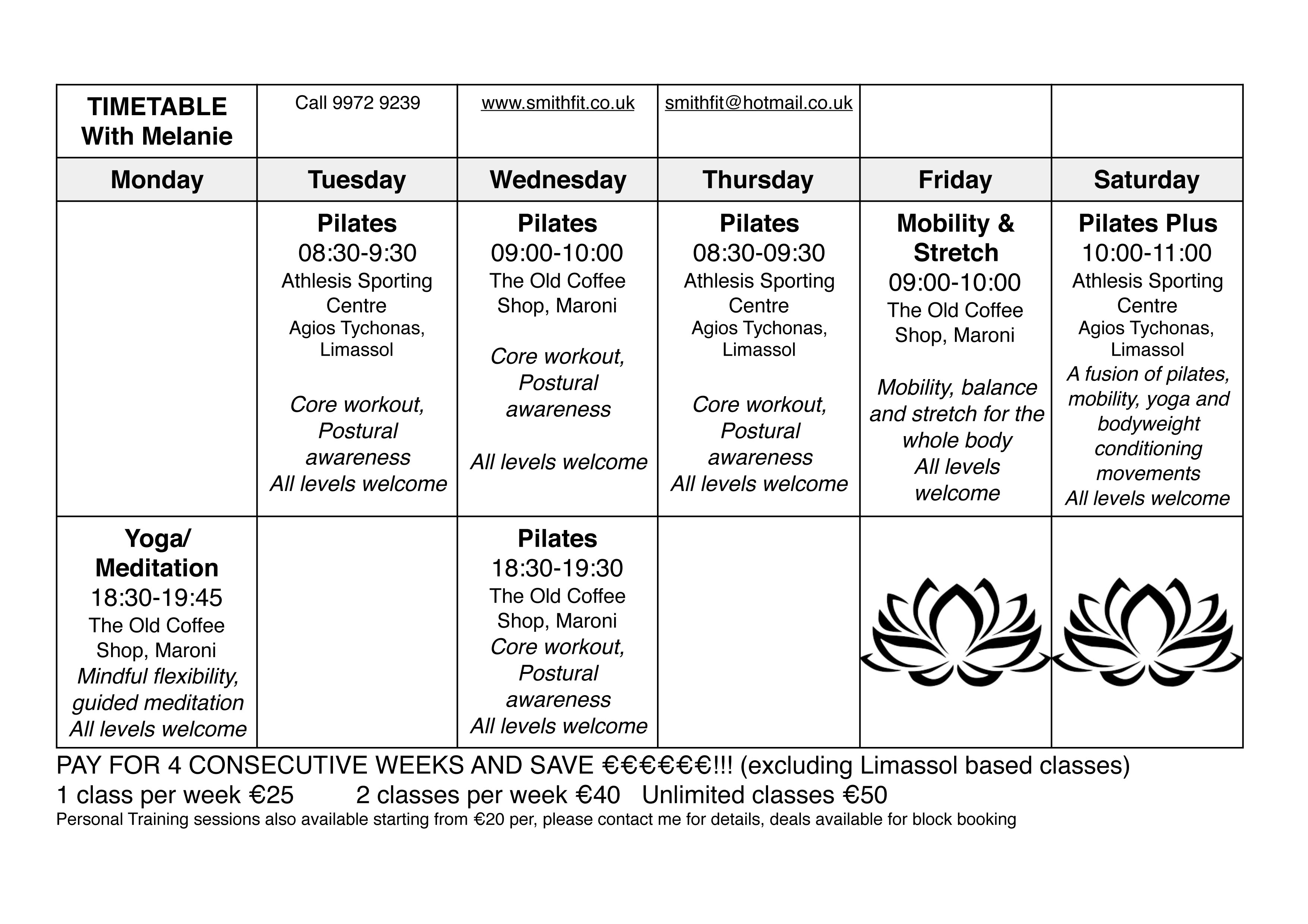
Mind-Body Maroni Timetable:
 maroni.life